

Choosing a hybrid event platform isn’t just a technology decision. It’s a risk decision.
Hybrid events combine the hybrid aspects of both a physical event—where attendees gather in person at a venue—and virtual participation, allowing people to join remotely via a conferencing platform. These events can take the form of meetings, conferences, workshops, and trade shows, blending in-person and virtual audiences for greater flexibility. The demand for hybrid events has increased, especially due to the COVID-19 pandemic, as they enable organizations to reach larger audiences and boost engagement compared to traditional formats.
For corporate event teams, the platform you choose will influence executive perception, sponsor confidence, attendee engagement and post-event reporting.
By the time you’re reviewing options seriously, you don’t need theory. You need clarity.
This checklist is designed to help corporate teams validate whether a hybrid event platform is truly enterprise-ready before signing a contract.
Introduction to Hybrid Events
Hybrid events blend the best of both worlds—traditional in-person gatherings and dynamic virtual experiences. For corporate events, this approach empowers event planners to reach a wider audience, boost audience engagement, and create engaging experiences that resonate long after the event ends. Attendees can choose to participate in person or join virtually, making events more accessible and inclusive. By leveraging advanced hybrid event platforms, companies can seamlessly connect in-person and virtual attendees, ensuring everyone feels involved and valued. Careful planning and thoughtful execution are essential to maximize engagement and deliver a memorable event experience for every participant, regardless of how they choose to attend.
pany should ensure that hosting the hybrid event aligns with its branding and strategic goals. Hosting hybrid events can also reduce travel costs for attendees, making participation more accessible.
Ask about dedicated account management, technical onboarding, pre-event rehearsals, live event support and post-event reporting assistance. Partnership reduces operational stress.
- Streaming Integration & Performance
Hybrid events rely on flawless streaming. If your platform struggles under load, the entire event experience suffers.
Your hybrid event platform should integrate with your chosen streaming provider, support multiple concurrent live sessions, offer seamless on-demand playback, and handle peak traffic without performance issues. Choosing the right platform and streaming platforms is essential to ensure a reliable live stream for both in-person and virtual audiences. The virtual component of a hybrid event requires the right tools to deliver engaging virtual content, including features like online polls and interactive Q&A sessions. Selecting a venue with the right infrastructure is also necessary to support the virtual elements and streaming requirements.
Ask vendors directly about concurrency limits and stress testing. If they can’t answer confidently, that’s a red flag.
- Unified Engagement Across Audiences
Hybrid means one audience ecosystem, not two separate experiences.
Your platform should support live Q&A for both in-person and virtual attendees, polling that captures unified data, moderated chat functionality, audience polls, and cross-format networking. Live Q&A sessions and audience polls enhance engagement for both in-person and virtual participants, making the experience more interactive and inclusive. Creating breakout sessions allows digital audiences and online attendees to network in smaller groups, fostering deeper connections. Using a mobile app can unify the experience for all participants, ensuring seamless access to content and engagement tools. Gamification can further encourage audience engagement by introducing competition and rewards during the hybrid event. Integrated technology enables you to track audience engagement metrics more effectively, providing valuable insights for future planning.
If online attendees feel like passive observers, engagement drops quickly. A true hybrid event platform ensures interaction flows naturally across both environments and makes online attendees feel included.
- Marketing Strategy
A successful hybrid event starts with a creative and targeted marketing strategy. Event planners should design compelling invitations and event content that clearly communicate the event’s unique value and objectives. Collaboration between sales and marketing teams is key to understanding the audience and tailoring messages that resonate. Building excitement through early-bird offers, targeted advertising, and innovative campaigns can drive participation and keep attendees talking. It’s important to interact with your audience before, during, and after the event, using social media and other channels to maintain engagement. By focusing on the needs and interests of your attendees, you can create a marketing plan that not only fills seats—both virtual and in person—but also sets the stage for a truly successful hybrid event.
- Enterprise-Level Security & Compliance
Corporate environments demand high security standards.
Before moving forward, confirm GDPR compliance, secure login options (including SSO if required), encrypted data storage, clear privacy policies and defined data retention periods.
IT approval delays are common. Address security early in the evaluation process.
- Scalable Infrastructure
Your platform must scale, not just for this event but for future growth.
Evaluate maximum concurrent users, global accessibility, multi-time-zone support, large content libraries and multi-event portfolio management. Hybrid events can accommodate large groups by combining in-person and virtual participation, allowing you to reach audiences anywhere in the world. This increases audience size and provides richer data from digital tracking tools.
A platform that works for 500 attendees may not perform the same way at 5,000. Scalability protects long-term strategy.
- Reporting & Data Transparency
Corporate stakeholders expect measurable results.
Your hybrid event platform should provide real-time engagement dashboards, attendance tracking (virtual and physical), session analytics, sponsor interaction metrics and exportable post-event reports. Hosting event content online for on-demand access not only extends your event’s reach but also allows you to repurpose recordings for marketing purposes, maximizing engagement with a wider audience.
If reporting feels fragmented or unclear during the demo stage, it won’t improve after the event. Data-driven follow-up should include using platform analytics to track engagement, provide on-demand access to recordings, and gather valuable insights into audience preferences to improve future events. Data clarity is one of the biggest strategic advantages of hybrid.
- Sponsor & Commercial Capabilities
Sponsors increasingly expect measurable ROI.
Look for branded sponsor areas, sponsored sessions, click tracking, lead capture functionality and engagement reporting.
Without these features, monetisation opportunities become limited.
- Brand Control & White-Labelling
Corporate events are brand moments.
Your hybrid event platform should support full white-labelling, custom domains, branded login environments and flexible design control.
The attendee experience should feel like your organisation, not a third-party tool.
- Dedicated Support & Partnership
Software alone isn’t enough.
Hybrid events involve marketing teams, AV suppliers, IT departments and executives. A well-coordinated team is essential, with event organisers playing a key role in planning and executing the event, while the company should ensure that hosting the hybrid event aligns with its branding and strategic goals. Hosting hybrid events can also reduce travel costs for attendees, making participation more accessible.
Ask about dedicated account management, technical onboarding, pre-event rehearsals, live event support and post-event reporting assistance. Partnership reduces operational stress.
- Pricing Clarity & Long-Term Fit
Corporate procurement requires transparency.
Before committing, clarify the pricing model (per event vs licence), virtual attendee limits, feature tier restrictions, support inclusions and scalability pricing.
The cheapest option upfront can become the most expensive if you need to upgrade mid-cycle.
Best Practices for Hybrid Events
To deliver a successful hybrid event, event planners should focus on strategies that unite both in-person and virtual audiences. Start by aligning your marketing and sales teams to ensure a cohesive approach, and develop a robust marketing plan that leverages event marketing to interact with your audience. Get creative with your invitations and event content to capture attention and encourage participation. Choose a hybrid event platform that supports seamless interaction, and consider partnering with experienced production teams to manage both the physical and virtual components. Offer on-demand content and create audience tiers to cater to different preferences, ensuring everyone—from virtual attendees to those attending in person—can engage meaningfully. By prioritizing networking opportunities and interactive elements, you’ll create a hybrid event that’s engaging, memorable, and tailored to the needs of every attendee.

The Corporate Hybrid Platform Validation Summary
Before signing with any hybrid event platform provider, confirm you can confidently answer yes to:
- Streaming stability
- Unified engagement tools
- Enterprise security
- Scalable infrastructure
- Clear reporting
- Sponsor ROI features
- Brand flexibility
- Dedicated support
- Transparent pricing
If even one of these areas feels uncertain, pause. Decision-stage mistakes are expensive to unwind.
Why This Hybrid Event Checklist Matters
Hybrid events sit at the intersection of brand, data and commercial performance. They create a lasting impression by allowing content to be accessed over time and offering interactive features that engage attendees. Hybrid events also provide greater flexibility in attendance, accommodating those who may not be able to join in person.
Choosing the right hybrid event platform protects executive reputation, sponsor relationships, attendee engagement and internal credibility. The form of a hybrid event is more complex than that of traditional or virtual-only events, as it requires simultaneous management of on-site logistics and digital broadcasting. This integration of formats not only enhances engagement but also helps promote your next event by keeping your audience connected and interested.
The wrong choice introduces friction across all four.
Corporate event teams don’t need more features. They need certainty.
Ready to see how CrowdComms measures up?
Explore our enterprise-ready hybrid event platform and see how we support global corporate events.
Frequently Asked Questions
A mobile event app is a mobile or web-based application that supports event attendees with agendas, engagement tools, content, notifications and interaction.
The best event app depends on your goals. For engagement-led events, specialist mobile event apps often outperform all-in-one platforms.
Attendees use event apps that are intuitive, interactive and relevant to their experience. Are event apps dead? Definitely not. Read or watch our 2025 Event Advice on event apps.
Yes, modern event platforms support in-person, hybrid and virtual attendees through mobile and web-based access.
Related Articles:
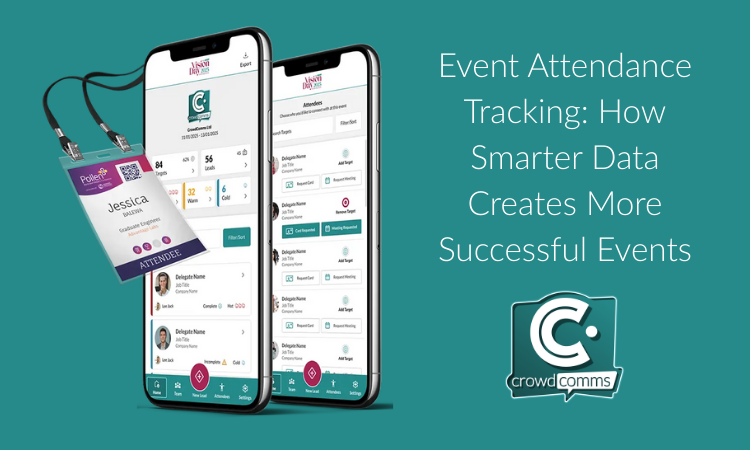
Event attendance tracking has rapidly evolved from a simple headcount to one of the most