Learning from previous experiences with event badges can help you improve your next event by identifying what worked well and what could be enhanced.
For enterprise conferences and association events especially, event badges are not just identification tools. They influence event networking, operational flow, security, inclusivity, and overall perception.
In our latest episode of Event Advice, we explored the psychology behind event badges and how small design decisions can significantly impact the success of an event.
👉 Watch the full episode here.
This article expands on those insights, offering practical events management tips for event organisers who want to improve badge design at their next conference or corporate event, and create a positive impact on society through more inclusive and accessible events.
Introduction to Event Badges
Event badges are a vital component of any successful event, acting as more than just a means of identification. For organisers, badges are an important aspect of event branding and help set the tone from the moment attendees arrive. In most cases, event badges are custom-designed to reflect the unique theme and style of the event, making them a memorable keepsake for attendees.
These badges not only help identify participants and their roles but also foster a sense of belonging and community. With modern technology, organisers can now create, print, and manage badges efficiently, ensuring that this essential detail supports the overall success of the event. By giving careful attention to badge design and production, organisers can reinforce their event’s branding and deliver a seamless experience for everyone involved.
Why Event Badges Matter in Large-Scale Event Planning
In the early planning stages of an event, badging is often logged under “production” or “print.” It is crucial to allow enough time in the planning stages to ensure all logistics, vendors, and permits are arranged properly and to prevent last-minute issues. But for event organisers managing large conferences, association congresses, or enterprise gatherings, event badges affect:
- Registration speed
- First impressions
- Event networking
- Access control
- Sponsor visibility
- Security compliance
It is also important to assess risks and logistics, including fire safety and contract implications, as part of the planning process.
At scale, small inefficiencies compound. If 2,000 attendees experience friction at check-in, it shapes the emotional tone of the entire event.
Event badges are often the first physical interaction someone has with your event. Before they attend a keynote or walk the exhibition floor, they queue, register, and receive their badge. The event location plays a key role in accessibility and attendee convenience, making it easier for everyone to participate.
That moment sets expectations.
Check the situation early on to find out what bookings, permissions, and licences you need, and plan how you are going to cover the costs of your event.
The First Experience of Your Event Happens at the Venue Entrance
No matter how strong your programme is, the real beginning of an event happens at the venue entrance.
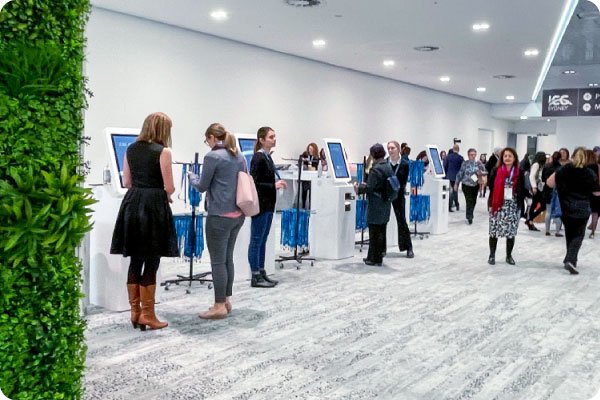
Long queues, unclear signage, and slow badge printing can create frustration before attendees even enter the main space. When planning your entrance process, always consider the safety of everyone present, including volunteers and visitors, at the venue.
For a successful event, badge design and onsite printing strategy must support speed.
This means:
- Designing conference badges that print quickly
- Avoiding heavy ink coverage that slows down on-demand printing
- Using clear typography for instant readability
- Structuring layouts that prioritise essential information
- Designing and managing event passes for efficient check-in and access control
If your event badges are visually cluttered or technically inefficient to print, you risk slowing down your entire event management operation.
When event organisers prioritise clarity and function during the planning stages, they protect both attendee experience and operational efficiency.
If you’re reviewing your approach to onsite badging, explore our event badges solution here.
Psychology of Event Attendance
Understanding why people choose to attend an event is crucial for organisers aiming to boost attendance and engagement. Attendees are motivated by a range of factors, from the promise of valuable knowledge and networking opportunities to the anticipation of entertainment and unique experiences.
Organisers can encourage participation by crafting a compelling event programme that clearly communicates what attendees can expect. Providing concise information, offering incentives like early-bird discounts or exclusive content, and developing targeted marketing strategies all help to create excitement and drive attendance. By tapping into the psychology of event attendance, organisers can create events that not only attract a diverse range of attendees but also deliver on their expectations, ensuring a positive and memorable experience.
Designing Event Badges for Human Behaviour
Event badges are worn in dynamic environments. People glance quickly. They scan rooms. They decide who to approach in seconds. That’s why clarity must come before decoration.
A helpful test discussed in the episode is the “blur test.” If you blur your conference badges — or simply squint at them — can you still identify the most important information?
When designing badges, it’s important to consider the profile of your audience and the needs of different delegates. This ensures that all delegates can easily access the information they need.
At a minimum, delegates should immediately see:
- The delegate’s name
- Their organisation
- Their role (if relevant)
If sponsor logos, background graphics, or colour blocks compete with these core details, networking in event management becomes harder.
Good event badge design reduces cognitive load. Poor design increases it.And when delegates feel uncertain, they hesitate to engage.
Event Networking: Turning Badges Into Conversation Starters
Event networking is one of the primary reasons people attend a conference or association event. But effective event networking doesn’t happen automatically. It needs support.
Traditional event badges show name, organisation, and job title. But in enterprise and association environments, that often isn’t enough to spark meaningful conversation.
Consider expanding event badges to include:
- Sector specialism
- Industry sector
- Regional representation
- Years of membership
- Project involvement
- Selected personal interests
For example:
“Healthcare Policy | Member Since 2015 | Marathon Runner”
Suddenly, event networking becomes easier. Shared signals create instant connection.
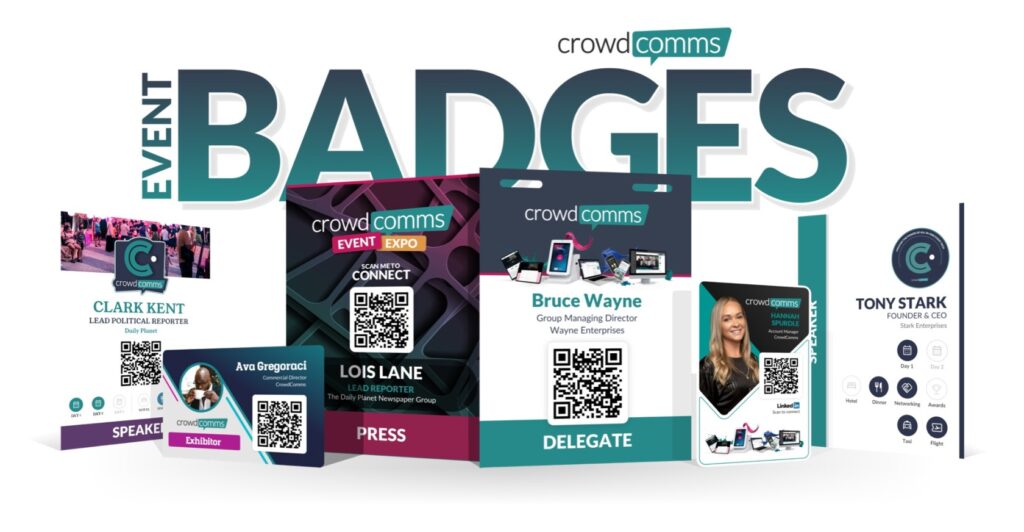
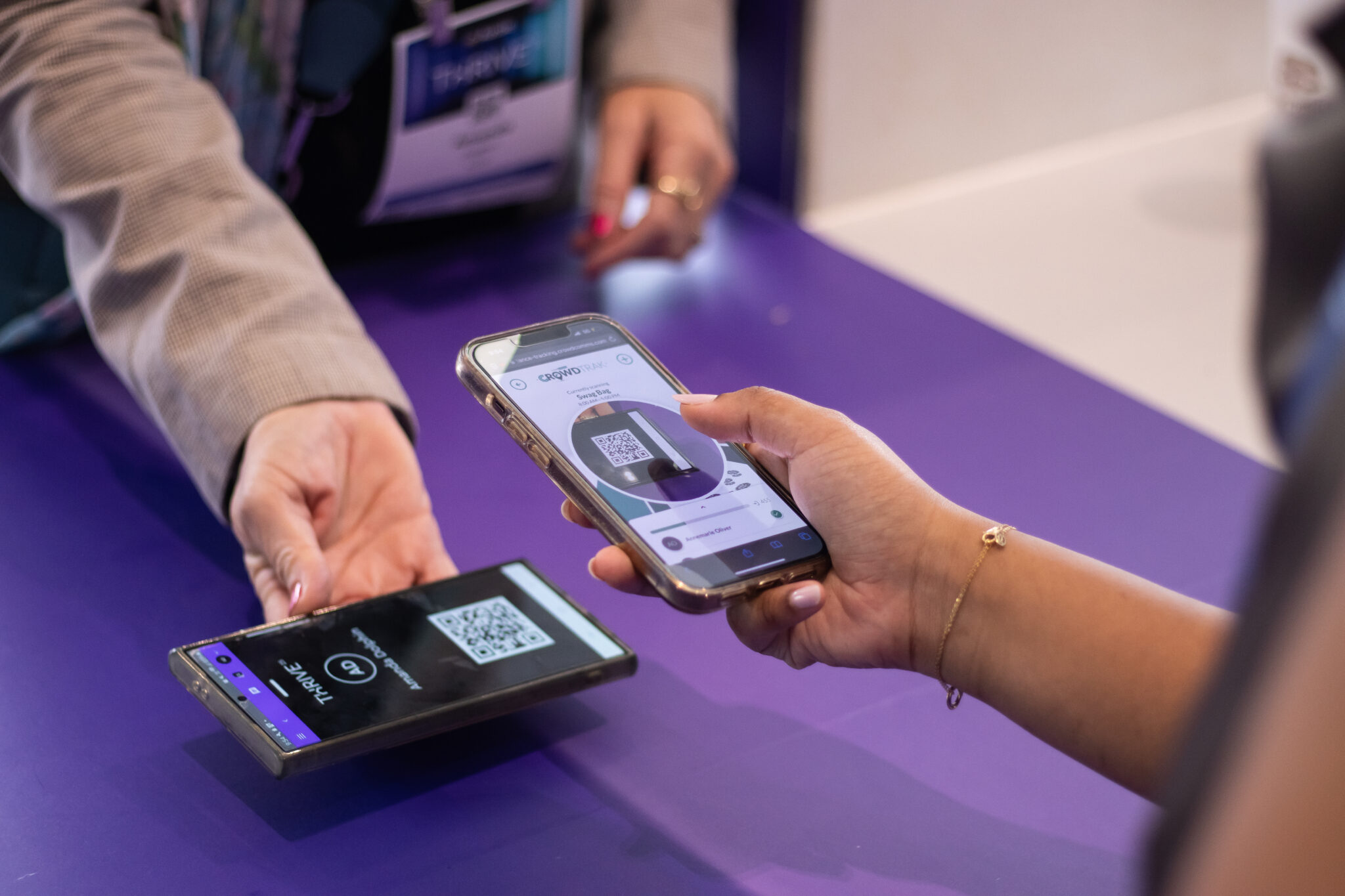
Including QR codes on event badges enables fast entry scanning and lead capture, while RFID/NFC technology is often used for access control and tracking at larger events. These tools help exhibitors and organisers efficiently collect and manage attendee leads during networking and throughout the event.
For event organisers focused on delivering a successful event, thoughtful personalisation can transform networking in event management from awkward introductions to high-quality conversations.
Visual Identity and Access Control at Your Event Venue
In large venues, access management becomes complex.
You may have:
- VIP lounges
- Speaker-ready rooms
- Sponsor hospitality areas
- Restricted breakout sessions
- Internal leadership meetings
Relying entirely on digital scanning can slow movement. Strategic visual markers on event badges allow staff to validate access instantly. Team coordination and having clear procedures for managing access control are essential to ensure staff can handle any issues efficiently and maintain smooth entry to restricted areas.
Colour coding or subtle iconography on conference badges helps staff identify access rights without confrontation or delay.
For event organisers managing complex venues, this approach improves flow and reduces friction. It also protects the experience of those who have paid for premium access.
To further streamline operations, clarify assignments of ownership for every logistical area using a RACI matrix, and establish a dedicated, instant communication channel for staff to address issues immediately.
Security and Trust in Enterprise Events
In regulated industries and high-profile enterprise events, security is non-negotiable. It is essential to assess security risks and ensure all necessary insurance requirements, such as public liability insurance, are met.
Photo-enabled event badges provide an additional layer of validation. They reduce the risk of badge swapping and unauthorised access — something that has occurred at major events when discarded badges were reused.
For corporate event management teams, this isn’t just operational. It’s reputational, and they are responsible for the safety and security of all attendees. A secure event venue reinforces trust.
When attendees feel that your event is controlled and professionally managed, it enhances overall perception.
Inclusivity and Accessibility in Event Badge Design
A successful event today must reflect broader organisational values.
Event badges can support:
- Pronoun visibility
- Clear typography for ageing audiences
- High-contrast colour schemes for accessibility
- Sustainable material choices aligned with ESG goals
- Family-friendly facilities, such as dedicated family rooms, to support attendees with children
Enterprise and association events often attract international audiences. Clear design helps non-native speakers navigate the event more confidently.
Event organisers who consider accessibility at the planning stages demonstrate commitment to inclusion. And inclusion improves overall event satisfaction. When planning your event, also consider the impact it may have on the neighbourhood and wider society.
Digital and Physical Event Badges Serve Different Functions
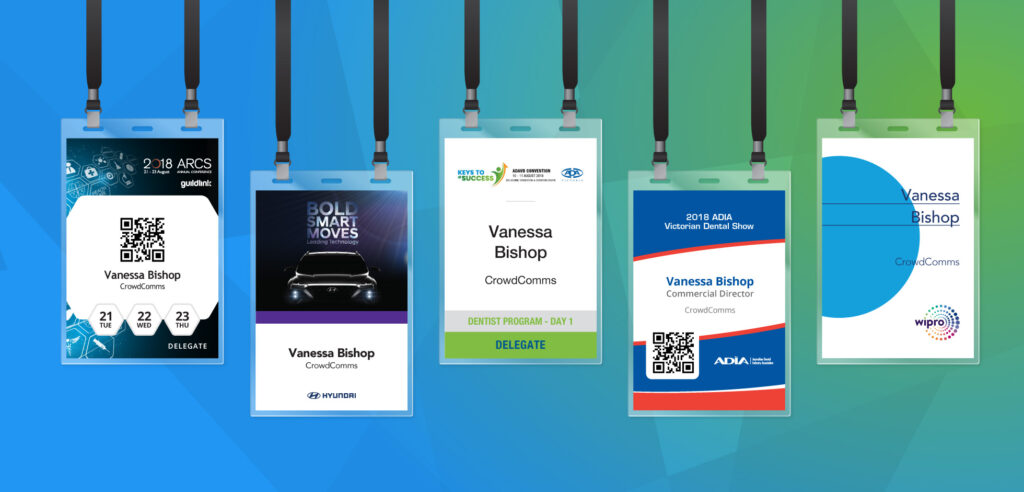
Digital badges primarily support scanning and data capture. Physical event badges primarily support human interaction. Trying to mirror both exactly can dilute effectiveness.
For digital badges:
- The QR code should dominate.
- Scannability is key.
For physical conference badges:
- Readability is key.
- Hierarchy matters more than decoration.
When planning your event technology stack, consider how both formats complement each other. The process of designing and producing personalised event badges—whether digital or physical—should include options to customize material, size, design, branding, text, patterns, colors, and security features to meet your specific event requirements.
Creating a Unique and Memorable Experience
A successful event is defined by the experience it creates for attendees. Organisers must plan every detail, from selecting the right venue and catering to curating entertainment and interactive activities.
For example, choosing a strong theme can unify the event and make it more engaging, while incorporating workshops, games, or challenges encourages participation and keeps energy high. Preparing in advance and considering the attendee journey at every stage helps ensure that the event stands out, whether it’s a conference, exhibition, or social gathering. By focusing on these details, organisers can create an environment that is both enjoyable and meaningful, inspiring attendees to return for future events and share their positive experiences with others.
Commercial Considerations: Sponsors and Event Badges
Sponsors often request placement on event badges. This is understandable — badges are highly visible throughout the event. However, overcrowding event badges with logos can reduce clarity.
If attendees struggle to read each other’s names because of competing visual elements, event networking suffers. A balanced design protects both sponsor visibility and usability.
Event badges typically include information such as name, company, role, attendee type, and a unique ID. For event organisers, the goal is simple: design conference badges that enhance networking while maintaining commercial value.
When planning badge design, consider the costs of production and branding. Developing a budget early can help prioritize spending and explore cost-offsetting opportunities.
Event Marketing and Promotion
Effective event marketing and promotion are essential for ensuring strong attendance and engagement. Organisers have a range of tools at their disposal, from social media campaigns and email marketing to targeted advertising. Highlighting the event’s key features and benefits, and creating a compelling programme, can encourage potential attendees to register.
It’s important to identify the right audience by using data and analytics to understand attendee demographics and interests. By taking a strategic approach to marketing and promotion, organisers can maximise attendance, generate buzz, and ensure their event stands out in a crowded marketplace. Encouraging early registration and maintaining consistent communication helps build anticipation and sets the stage for a successful event.
Building a Community Around an Event
Building a community is a vital part of creating a successful event that has a lasting impact. Organisers can foster a sense of connection among attendees by offering a range of opportunities for networking and engagement, both during and after the event. This might include dedicated social media groups, interactive sessions, or post-event follow-ups that encourage attendees to share their experiences.
By creating platforms for discussion and collaboration, organisers help attendees feel invested in the event and more likely to become advocates for future gatherings. A strong community not only enhances the immediate event experience but also supports long-term success by encouraging loyalty and ongoing participation.
Reviewing Your Event Badges Before Print
Before finalising your event badges, conduct a structured review:
- Print a physical sample.
- Test readability from two metres away.
- Run the blur test.
- Simulate peak check-in.
- Ask staff if they can visually segment attendees quickly.
- Check every last detail before sending badges to print.
During the planning stages of your event, badge design should be reviewed alongside:
- Registration strategy
- Venue flow
- Security requirements
- Networking objectives
- Sponsor obligations
Event badges are not an isolated design asset. They sit at the intersection of operations, branding, and behaviour.
To prepare thoroughly, conduct a full rehearsal of all equipment, lighting, and transitions at least 24 hours before doors open. Planning early can help identify potential obstacles and create solutions to overcome them.
Elevating Badge Design for a More Successful Event
When event organisers treat event badges as strategic tools rather than administrative necessities, the impact is significant. Establishing a clear vision for your event and setting specific objectives from the outset ensures that every detail, including badge design, aligns with your overall concept and goals.
Better badge design can:
- Reduce registration queues
- Improve event networking
- Strengthen security
- Support inclusivity
- Enhance sponsor value
- Improve overall event perception
In large-scale event management, small improvements compound. A slightly clearer layout. A slightly faster print speed. A slightly smarter visual identifier. Together, these improvements shape the attendee experience.
If you’d like to explore the thinking behind this in more depth, watch the full episode here.
And if you’re evaluating your event badges for your next conference or enterprise event, learn more about our onsite badging solution here.
Because in event management, success is often determined by the smallest details. And event badges are one detail that no successful event should overlook.
Remember, the ongoing task of seeking feedback after your event is essential for evaluating success and identifying areas for improvement in future events.