
Virtual events have matured fast, but the question remains the same: which virtual event platform—an online platform central to seamless event delivery—will actually deliver engagement, data, and ROI for your organisation? If you are comparing platforms, feeling overwhelmed by feature lists, or trying to justify investment internally, this guide is for you. Choosing the right platform for your needs is crucial to ensure your event’s success.
This long-form, practical breakdown is written for agencies, enterprise teams, and associations who want clarity, not hype.
What are virtual events and why do they still matter in 2026?
Before choosing the best virtual event platform, it is worth grounding ourselves in the basics. A virtual event is an event that takes place online and involves people interacting within a digital environment, whether through live streams, webinars, or virtual reality settings.
Virtual events are a type of online event, which also includes webinars, live streams, and hybrid events. Online events are hosted in digital environments and often feature interactive elements such as networking, virtual spaces, and real-time engagement.
What are virtual events?
Virtual events are organised experiences delivered online where attendees participate remotely. These experiences are powered by virtual event software, which provides the technology and features needed to host and manage engaging online events. These can include:
- Virtual conferences and summits
- Online trade shows and exhibitions
- Webinars and workshops
- Virtual meetings
- Host webinars
- Hybrid events with a virtual audience
- Internal meetings, training, and town halls
Unlike simple video calls, modern virtual events platforms are designed to replicate and enhance the structure of live events. Think agendas, stages, networking, sponsors, analytics, and audience interaction.
Why virtual events are still a core channel
Despite the return of in-person events, online virtual events remain a strategic pillar because they:
- Extend reach beyond geography, allowing you to reach a broader audience by removing physical and logistical barriers
- Lower cost per attendee. Virtual events are cost-effective compared to in-person events, as they eliminate expenses related to venue rental, catering, and logistics.
- Provide rich first-party data
- Support year-round engagement strategies
- Offer accessibility and inclusivity benefits
For many enterprise and association teams, virtual events are no longer a pandemic workaround. They are a permanent part of the event portfolio.
What defines the best virtual event platform in 2026?
Not all platforms are created equal. In 2026, the best virtual event platform is not the one with the longest feature list. The top platforms are defined by their key features and their ability to deliver seamless event management, ensuring scheduling, registration, and attendee engagement are smooth and efficient. It is the one that aligns with your goals, audience, and internal workflows.
The shift from tools to experience platforms
Earlier virtual events platforms focused heavily on streaming. Today, buyers expect a complete experience layer that supports a comprehensive virtual event experience, replicating the event experience online through immersive experiences and interactive features. Virtual events work using technology specifically designed to replicate the event experience online. This includes:
- Attendee journeys before, during, and after the event
- Sponsor and exhibitor value
- Data integration with CRM and marketing systems
- Brand control and customisation
- Scalability across multiple events
This shift is especially important for agencies and associations running multiple events per year.
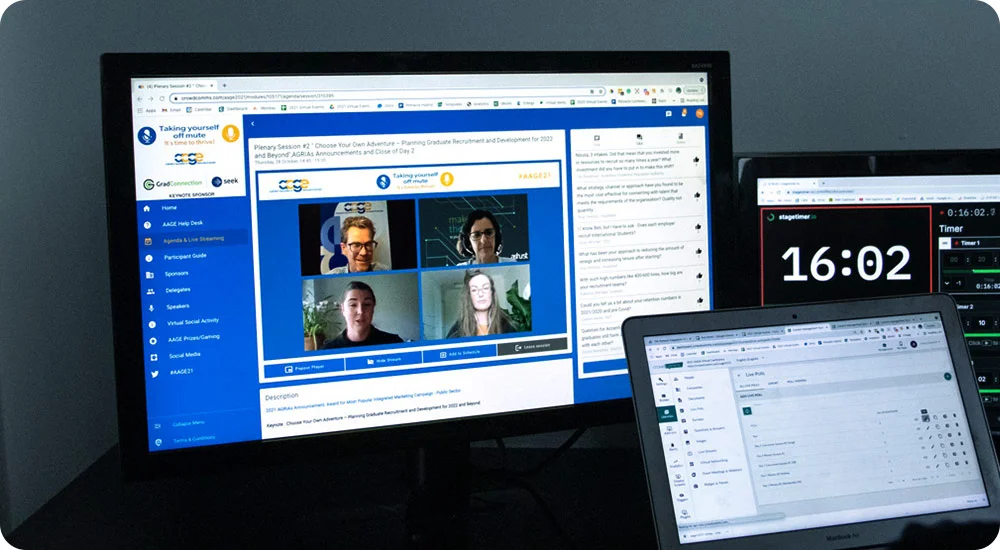
Core features every virtual event platform must offer
When evaluating a virtual events platform, these capabilities are now table stakes. It’s essential to assess the platform’s capabilities, including available customization options, to ensure the solution can be tailored to your branding and event needs.
Reliable live and on-demand streaming
Your platform should support:
- Live streaming for real-time sessions, interactive keynotes, and networking opportunities
- Pre-recorded and simulive sessions
- Session replays and on-demand libraries
- Global audience performance
High-quality audio-visual production enhances the overall experience of virtual events.
Stability matters more than flashy visuals. A dropped stream costs trust instantly.
Structured agendas and session management
Look for tools that allow you to:
- Build multi-track agendas as part of comprehensive event management
- Manage speakers and moderators
- Control session access levels
- Push reminders and notifications
- Integrate with Google Calendar for seamless scheduling and syncing of sessions
This is especially important for conferences and association events with complex programmes.
Audience engagement tools
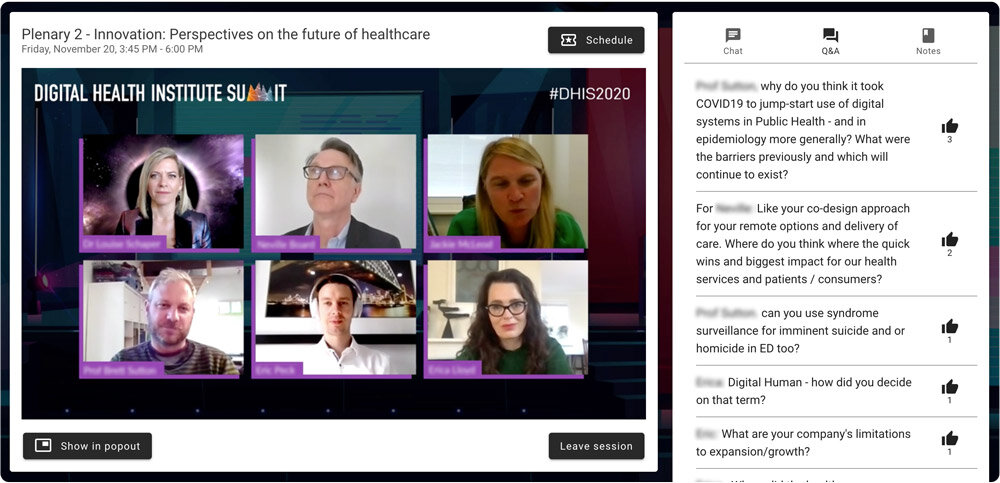
The best virtual event platform supports real interaction, not passive viewing. Interactive features are essential for attendee engagement and participation, helping to create a dynamic environment that encourages active involvement.
Key engagement features include:
- Live chat and moderated Q&A: Live chat allows participants to interact and share files without interrupting the speaker during virtual events.
- Polls and surveys
- Session reactions
- Gamification and challenges: Gamification elements, such as trivia quizzes and scavenger hunts, can enhance audience engagement.
From experience, attendee engagement and participation drive retention and data quality far more than production value.
Why CrowdComms Is a Leading Virtual Event Platform in 2026
By 2026, most buyers are no longer looking for a standalone virtual events tool. They are looking for a virtual event platform that can support multiple event formats, multiple audiences, and long-term engagement without adding complexity.
CrowdComms is built specifically for that reality, empowering event organizers with seamless event management and custom branding options.
At its core, CrowdComms is a complete virtual event platform designed for agencies, enterprise organisations, and associations that run serious events at scale. It brings together virtual, hybrid, and mobile-first experiences into one connected platform, rather than treating virtual events as a bolt-on or temporary solution.
CrowdComms virtual event platform
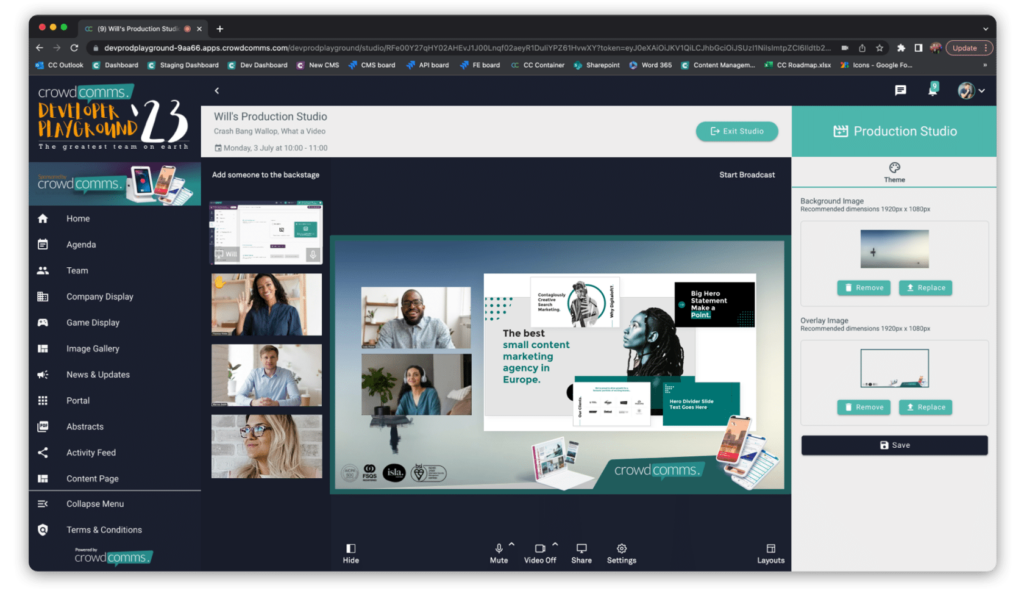
CrowdComms is an end-to-end virtual and hybrid event platform that supports the full event lifecycle. It offers customizable registration pages to help event organizers manage attendee sign-ups and event branding, as well as detailed analytics for comprehensive insights into event performance. From registration and audience access, through live and on-demand virtual events, to engagement, networking, and post-event insight, everything lives within one ecosystem.
Who CrowdComms event tech is for
CrowdComms is built for:
- Agencies delivering virtual and hybrid events for multiple clients
- Enterprise teams running secure, data-driven events
- Associations engaging members and non-members year-round
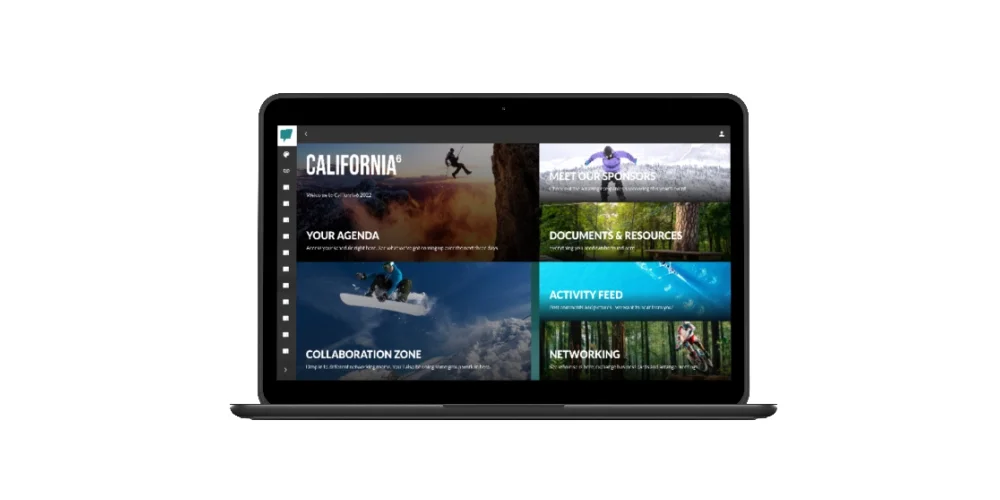
It is designed for organisations that need flexibility, control, and consistency across their event portfolio. The platform features a user friendly interface that requires minimal technical expertise, ensuring ease of use for both organizers and attendees.
What problems CrowdComms solves
Many virtual events fail because teams rely on disconnected tools. Streaming lives in one place, registration in another, engagement somewhere else, and data is fragmented at the end. CrowdComms solves this by unifying the experience for organisers, attendees, sponsors, and stakeholders. With its comprehensive analytics and reporting features, the platform enables organisers to gain insights from event data, helping them measure success and improve future events.
More specifically, the platform supports:
Virtual events
CrowdComms enables fully virtual conferences, summits, webinars, and online virtual events, with structured agendas, live and on-demand sessions, speaker management, and built-in engagement. The platform supports immersive virtual experiences, including virtual trade shows, by offering interactive environments such as virtual lobbies, expo halls, and networking opportunities to deliver a comprehensive virtual event experience. Virtual audiences are treated as first-class participants, not passive viewers.
Hybrid events
Virtual and in-person audiences can coexist within the same platform. Hybrid events combine an in person event at a physical location with virtual participation, enabling attendees to join either on-site or online. Engagement, content access, and communications are shared, allowing hybrid events to feel like one experience rather than two separate ones.
Mobile experience
Native, branded mobile event apps sit at the heart of the platform, enhancing the online experience by providing seamless access to event content and engagement tools. Attendees can access content, engage with sessions, connect with others, and interact with sponsors from anywhere, creating a consistent experience across devices.
Registration and access control
Integrated registration and audience management allow organisers to control access, segment audiences, and manage member, non-member, internal, or external attendees from a single system. This is particularly valuable for enterprise security and association membership models. The platform’s registration pages and access control features are designed for scalability, enabling the platform to handle varying attendee numbers without performance drops.
Engagement and interaction
CrowdComms focuses on meaningful engagement rather than novelty features. The platform tracks attendee behavior and encourages participation and networking among fellow attendees. Live chat, Q&A, polls, audience feedback, and sponsor interaction are designed to support conversation, insight, and participation throughout the event.
Data and insight
Every interaction within the platform generates first-party data. Organisers gain clear visibility into attendance, engagement, and content performance, enabling better reporting, stronger follow-up, and more informed future event planning. Detailed event analytics and reporting provide valuable insights into attendee engagement, demographics, event performance, and ultimately help measure the event’s success.
Taken together, this is why CrowdComms is best described as a virtual event platform, not just a virtual events solution. It is built for how events are planned, delivered, and measured in 2026, across virtual, hybrid, and mobile-first environments.
Features that separate good from great event platforms
This is where serious buyers start to see real differentiation. Customization options allow organizers to create a personalized experience that aligns with their brand identity, making CrowdComms stand out compared to other platforms due to its advanced capabilities.
Networking that actually works
Networking has been the Achilles heel of online virtual events. In 2026, platforms are expected to do better by enhancing networking opportunities through dedicated networking spaces and social lounges, allowing like minded individuals to connect and engage. Networking-heavy event platforms feature unique “social lounges” that allow attendees to move freely between group conversations.
Effective networking tools include:
- Attendee profiles with interests and roles
- 1 to 1 and small group meetings
- AI or rules-based matchmaking
- Integrated video meetings
- Networking spaces for attendee interaction
- Breakout rooms for small group discussions
For agencies and associations, networking quality is often the top post-event feedback metric.
Sponsor and exhibitor value
If sponsors fund your event, your virtual events platform must support them properly.
Look for:
- Virtual booths or branded spaces
- Exhibitor spaces for sponsors and vendors to showcase products or services
- Virtual exhibit halls that mimic physical trade shows and allow immersive interaction between vendors and attendees
- Lead capture and meeting booking
- Sponsor analytics and reporting
- Sponsored sessions, banners, and push messages
This is where many platforms still fall short. Data visibility for sponsors is critical.
First-party data and analytics
In a privacy-first world, virtual events are a goldmine of first-party data.
The best platforms provide:
- Session attendance and dwell time
- Engagement metrics per attendee
- Content performance reporting
- Exportable data or CRM integrations
This data fuels sales follow-up, marketing automation, and future event planning.
What do audiences need from event platforms
Not all buyers need the same thing. When organizing your first event, it’s crucial to choose the right virtual event platform to ensure a smooth launch, while planning ahead for your next event helps maintain engagement and drive ongoing success. Here is how requirements typically differ across CrowdComms’ core ICPs.
Agencies running events for multiple clients
Agencies need flexibility and efficiency.
Key priorities include:
- White-label branding per client
- Free plan options for accessible entry points
- Scalable pricing across events
- Fast setup and repeatable templates
- Strong support and onboarding
Eventcube offers a zero-cost plan for virtual event initiation, making it an attractive choice for agencies seeking budget-friendly solutions.
Agencies also value platforms that feel like a partner, not just a vendor.
Enterprise and corporate event teams
Enterprise teams focus on control, security, and integration.
Their must-haves often include:
- Single sign-on and access control
- Data security and compliance
- CRM and marketing platform integrations
- Internal stakeholder reporting
- Strong integration with platforms like Microsoft Teams (which integrates seamlessly with Microsoft 365) and Webex Events (which provides detailed insights into ticket sales, sponsorship, and attendee engagement), offering robust analytics and collaboration features
Virtual events are often part of a wider communications ecosystem, not standalone projects.
Associations and membership organisations
Associations use virtual events differently.
Common needs include:
- Member and non-member access rules
- Year-round content libraries
- CPD or certification tracking
- Community and networking features
For associations, a virtual events platform is often a long-term member engagement tool.
How CrowdComms approaches virtual and online virtual events
CrowdComms has spent years working with agencies, enterprises, and associations across live, hybrid, and virtual events. That experience shapes how the platform is built and supported.
Rather than positioning virtual as a separate product, CrowdComms treats it as part of a connected event ecosystem. In comparison, platforms like GoTo Webinar are designed specifically for hosting professional webinars with features such as pre-recorded content, automated scheduling, and real-time attendee interaction, while Zoom Events supports multi-session, customizable, and hybrid events with monetization options. Notably, Zoom also provides a free plan with core features suitable for straightforward digital gatherings.
You can explore this approach further on the virtual and hybrid landing page: https://www.crowdcomms.com/virtual-and-hybrid-landing/
Designed around real event workflows
CrowdComms is designed to support how event teams actually work, not how software demos look.
This includes:
- Pre-event comms and onboarding
- In-event engagement and sponsor delivery
- Post-event analytics and reporting
The goal is to reduce friction, not add another tool to manage.
Built for hybrid first, not virtual only
One of the biggest lessons since 2020 is that events rarely stay in one format.
CrowdComms is designed to support large scale events and larger events, ensuring that even complex or high-attendance virtual gatherings run smoothly. The platform also offers 24/7 Technical Support, which is crucial for reliability during large-scale events.
CrowdComms supports:
- Fully virtual events
- Hybrid events with in-person and remote audiences
- Seamless transitions between formats
This flexibility is increasingly important for future-proof event strategies.
Comparing virtual event platforms in 2026
When buyers search for the best virtual event platform, they are often comparing multiple tools side by side. Key factors to consider when evaluating virtual event software include integrations and compatibility. Integrations connect the platform with CRM, marketing automation, and other essential tools, while compatibility ensures the platform works seamlessly across different devices and browsers.
Here are practical questions to ask during commercial investigation.
How quickly can we launch?
Speed matters, especially for agencies and lean teams.
Ask:
- How long does onboarding take?
- Are templates provided?
- What level of support is included?
A powerful platform is useless if it takes months to deploy.
Who owns and accesses the data?
Data ownership is often hidden in contracts.
Clarify:
- Who owns attendee and engagement data?
- Can data be exported easily?
- Are integrations available or custom?
This matters hugely for enterprise reporting and association member insights.
What does success look like post-event?
Platforms should help you prove value, not just run the event.
Look for:
- Clear reporting dashboards
- Shareable reports for stakeholders
- Insights that inform future planning
This is where experience-led platforms stand out.
SEO, content, and year-round value from online events
One overlooked benefit of online virtual events is content longevity. Virtual event platforms provide valuable data and analytics that can be leveraged for future event planning and marketing strategies. With on demand content available after the event, organizers can continue to engage their audience and use post event follow up to nurture leads and drive further interaction. This ongoing engagement supports long-term marketing strategies and maximizes the value of each event.
Turning virtual events into content engines
Recorded sessions can become:
- On-demand content hubs
- Lead magnets and gated resources
- Sales enablement assets
- SEO-friendly long-form content
Associations and enterprises that do this well extend event ROI far beyond event day.
Have a look at our popular guide to virtual events here
Virtual events and search visibility
Virtual events support SEO by:
- Generating authoritative content
- Supporting topical expertise
- Driving branded search
- Creating linkable assets
This is particularly powerful for associations and B2B brands building thought leadership.
Common mistakes when choosing a virtual events platform
After working across hundreds of events, these mistakes come up repeatedly. One common mistake is underestimating the cost savings from avoiding venue rental with a virtual event platform, which can significantly reduce overall expenses compared to physical events.
Choosing based on features, not outcomes
More features do not equal better results.
Always ask:
- What problem does this feature solve?
- Will our audience actually use it?
Simplicity often outperforms complexity.
Underestimating internal resources
Even the best virtual event platform requires time and ownership.
Consider:
- Who manages the platform internally?
- Who supports speakers and sponsors?
- Who owns post-event follow-up?
Platforms should reduce workload, not create more.
Ignoring attendee experience
If attendees struggle to log in or navigate, engagement drops instantly. A user friendly interface is essential for keeping participants engaged. Immersive environments offer 3D virtual lobbies, auditoriums, and exhibit halls that mimic physical venues, enhancing the attendee experience.
Test:
- The attendee journey from invite to replay
- Mobile and desktop experiences
- Accessibility features
Your audience experience is your brand experience.
The future of virtual events in 2026
Virtual events continue to evolve, but some trends are clear. Virtual event platforms in 2026 range from simple video meetings to complex 3D trade shows. Immersive 3D conferences specialize in creating highly interactive environments, including virtual exhibit halls and customizable booths.
Fewer one-off events, more connected programmes
Brands and associations are moving towards:
- Always-on communities
- Content series rather than single events
- Integrated event and content strategies
Virtual events platforms that support this model will win long term.
Smarter data, not more data
The focus is shifting from raw metrics to insight.
Expect:
- Better audience segmentation
- Smarter engagement scoring
- Clear links between events and revenue or retention
This is where experience-led platforms deliver real value.
Frequently asked questions about virtual event platforms
1. What is the best virtual event platform in 2026?
The best virtual event platform in 2026 depends on your goals. Agencies, enterprises, and associations all have different requirements. Look for platforms that combine engagement, data, and flexibility rather than standalone streaming tools.
2. Are virtual events still effective compared to in-person events?
Yes. Virtual events are effective when designed intentionally. They excel at reach, accessibility, and data capture, especially when integrated into a wider event strategy.
3. What features should I prioritise in a virtual events platform?
Prioritise reliability, engagement tools, analytics, and ease of use. Important features to consider include breakout rooms and live presentations, which help engage attendees in real-time. Advanced networking, sponsor features, and customization options are also critical for commercial events.
4. Can one platform support both virtual and hybrid events?
Many modern platforms, including CrowdComms, are built to support virtual, hybrid, and in-person events within one ecosystem.
5. How do virtual event platforms support sponsors?
Strong platforms offer branded spaces, lead capture, meeting booking, and detailed sponsor analytics to demonstrate ROI.
6. Are virtual events platforms suitable for associations?
Yes. Associations use virtual events platforms for member engagement, education, CPD delivery, and community building year round.
7. How do I compare virtual event platforms effectively?
Use real use cases, not demo checklists. Ask vendors to show how they support your specific audience, event format, and reporting needs.
Summary – choosing the right virtual event platform
Choosing the best virtual event platform in 2026 is less about technology and more about partnership, experience, and outcomes.
Virtual events, online virtual events, and hybrid formats are no longer experiments. They are business-critical channels for agencies, enterprises, and associations.
If you want a platform built by people who actually run events, understand audiences, and care about long-term value, it is worth talking to the humans behind the tech.
Get in touch with the CrowdComms team to explore how your next virtual or hybrid event can work harder, smarter, and for longer.