
Background
The Royal College of Emergency Medicine (RCEM) is the professional body responsible for advancing emergency medicine in the United Kingdom and beyond. Dedicated to setting standards, training, and supporting emergency healthcare professionals, RCEM plays a crucial role in ensuring high-quality patient care in emergency departments. The College provides education, research, and policy guidance, advocating for improvements in emergency healthcare services. With a growing membership of emergency medicine specialists, trainees, and allied health professionals, RCEM is at the forefront of shaping the future of urgent and emergency care.
RCEM relied exclusively on in-person events before the pandemic disrupted their approach. Forced to pivot to virtual formats, they partnered with CrowdComms to develop a flexible, scalable event management solution that met their audience’s unique needs and supported future growth into year round education and in-person events.
Event Goals
- Enable seamless delivery of virtual, hybrid, and in-person events.
- Provide accessible and engaging content for a global audience, including members across time zones and professionals with varying schedules.
- Maintain professional event presentation while allowing for back-end customisation.
- Build a sustainable, efficient process for the RCEM team to manage events long-term.
Challenges
- Cancellations of all in-person events due to the pandemic.
- The need for a flexible virtual platform that allowed self-management and real-time updates.
- Accommodating complex audience requirements, such as varying user permissions and international access.
- Integration of hybrid event logistics during the return to in-person formats.
- Providing consistent, post-event on-demand access for attendees.
Solution
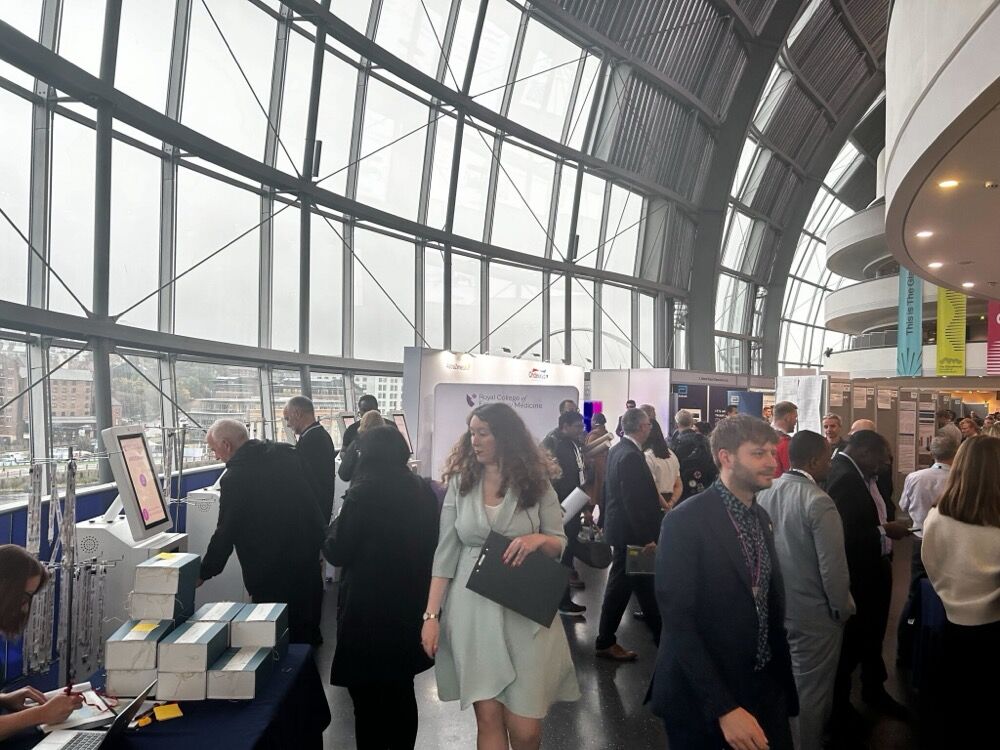
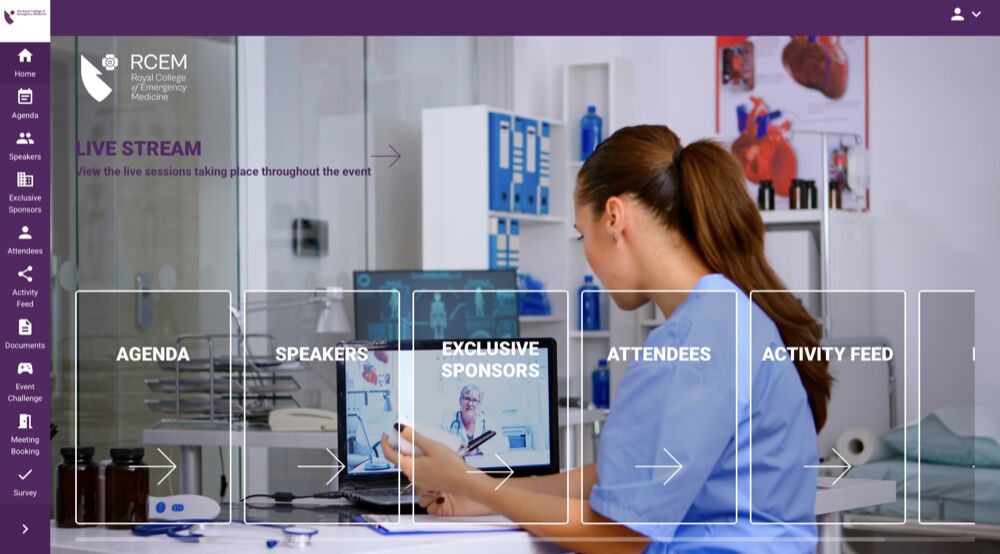
CrowdComms provided an intuitive event technology platform perfect for RCEM’s needs, allowing self-serve capabilities and adaptability to real-time demands. The partnership transitioned RCEM’s one-day study events into accessible, topic-specific virtual study days available on-demand, 20 a year. The platform enabled seamless hybrid event delivery by unifying virtual and in-person elements like live-streaming, paperless programs, and Q&A. CrowdComms provided on-site badge printing solutions to streamline event check-in and enhance attendee professionalism, while delivering consistent personalised support to let RCEM’s team focus on event delivery.
Outcome
RCEM’s partnership with CrowdComms enabled them to pivot seamlessly to virtual events and later expand into hybrid formats. With 90 successful projects over four years, the platform has allowed RCEM to broaden member engagement, increase accessibility, and build a stronger sense of community. RCEM is excited to explore how CrowdComms’ registration and abstract tools could support their ongoing event delivery in 2026 and beyond.